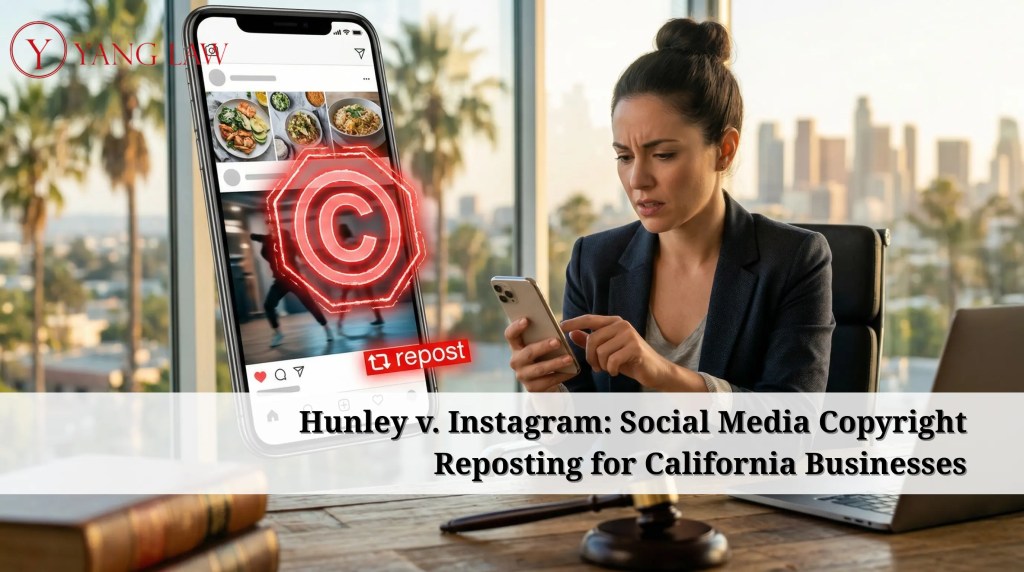
Think Reposting a Social Media Photo Is Harmless?
A restaurant shares a customer’s gorgeous Instagram brunch photo. Meanwhile, a realtor reposts a funny TikTok about the housing market. Later, a teenager copies a meme into their blog for a school project.
These feel like normal, everyday moments online. For years, many people believed that if a post is public, it’s basically free to reuse.
How Hunley v. Instagram Changed the Game
In 2023, the Ninth Circuit’s decision in Hunley v. Instagram shook that belief. The court reminded users that Instagram is not automatically handing everyone a free pass to repost or embed other people’s photos.
That matters a lot in California. As our federal appeals court, the Ninth Circuit covers California. And our state is packed with creators, influencers, and small businesses who live on social media. Under both federal law and California Civil Code § 980, the creator usually owns the content, not the person who reposts it.
This article is general information, not legal advice.
What Counts as Social Media Copyright Reposting?
Reposting vs. Embedding, in Plain English
On Instagram, TikTok, X, or Facebook, “reposting” means you take someone else’s content and show it again from your account. That can mean using the built‑in share button, downloading and re‑uploading a video, posting a screenshot of a meme, or copying a photo into your own feed or Stories.
“Embedding” is different. When you paste an Instagram or X post into your website or blog so it displays there, you are still using that creator’s content even if the file sits on Instagram’s servers, not yours. Courts treat that as a use that can raise copyright issues.
Who Owns the Content You See Online?
Under federal copyright law and California Civil Code § 980, the creator usually owns the photo, video, or graphic. Hunley v. Instagram makes clear that, even on Instagram, courts do not assume every website or business has a free license to reuse public posts. Public does not mean permissionless.
Common Reposting Mistakes That Can Get You in Trouble
Everyday Examples That Cross the Line
Reposting a customer’s Instagram photo in your ad or on your website without written permission is risky. You may violate both copyright and their right of publicity under California Civil Code § 3344.
Downloading a “viral” TikTok or Reel and uploading it to your brand’s account is usually a direct copy. Platform share buttons are one thing; saving and re‑posting is another.
Embedding someone’s Instagram photo or tweet into your blog might still infringe. Cases like Hunley and Goldman v. Breitbart show that embedding is not automatically safe.
Using memes built from movie stills, celebrity photos, or pro photography in your marketing can also cause trouble. In most cases, the original creator still owns the rights under Civil Code § 980.
Thinking “I gave credit, so I’m fine” is a common mistake. Credit is polite, but it is not a license or legal permission.
How to Repost Social Media Content the Right Way
- Ask if you really need that exact post. Often, your team can recreate a similar idea in‑house and avoid copyright issues under California Civil Code § 980.
- If you still want to use it, get permission in writing. A quick DM or email is fine, as long as you save screenshots where you clearly state how you’ll use the content.
- When the creator agrees, use the platform’s built‑in share tools whenever possible. Features like Instagram’s “share to Story” or TikTok’s duet keep you closer to how courts view in‑platform sharing: using tools, not copying files.
- For ongoing campaigns or influencer work, use a short written license or influencer agreement. That should also cover using someone’s face or voice in ads, which can trigger California’s publicity rights under Civil Code § 3344.
- If anything feels fuzzy, default to your own content or licensed stock. Owning or licensing content up front is usually cheaper than dealing with a dispute later.
The Real Risks: Lawsuits, Fees, and Reputation Damage
From “Simple” Demand Letter to Federal Lawsuit
Most copyright fights start quietly. You might get a demand letter or a DMCA takedown notice asking you to remove the post and pay something.
If that doesn’t resolve things, the creator can sue in federal court for copyright infringement. They can ask for money damages and, in many cases, their attorneys’ fees, which can quickly turn a small mistake into a five‑figure problem.
Extra California Claims When Faces and Brands Are Involved
When a business uses someone’s image, voice, or video to sell services without consent, California piles on more risk. Under Civil Code § 3344, the person can claim a violation of their right of publicity.
If a company routinely reposts others’ content to market itself, that can also be framed as unfair competition under Business & Professions Code § 17200. On top of legal exposure, public accusations of “stealing content” can seriously damage your brand.
A California Small Business Learns the Hard Way
“We Just Loved the Photo”
A small café in Pasadena thought they were doing something kind. The owner reposted a local photographer’s Instagram shot of their latte art and a regular’s smiling selfie, then turned both into a Facebook ad.
They didn’t ask permission. They figured, “It’s tagged, it’s public, and we’ll give them credit. What’s the harm?” Under California Civil Code § 980, though, the photographer still owned the image, and the customer still owned rights in their photo.
A few weeks later, the café got a demand letter. The photographer claimed copyright infringement and pointed to the recent Hunley decision as proof that reposting isn’t a free pass. The customer felt used and raised a right of publicity claim under Civil Code § 3344.
Eventually, the café paid a settlement, hired a lawyer, and lost a once‑loyal regular. Clear social media policies and simple written permissions could have avoided it. This story is a composite example, not legal advice.
Quick Checklist Before You Hit “Share” or “Post”
Before you repost anything, pause for a 30‑second gut check. Run through this list for yourself, your kids, and anyone handling your business or school account.
- Do I know who actually created this photo, video, music, or graphic? In California, the creator usually owns it (Civil Code § 980).
- Do I have clear permission in writing, like a DM, email, or contract? Platform terms and “everyone shares this” are not enough, especially after cases like Hunley.
- Am I using this to promote a business, brand, class, or paid post? If yes, be extra careful and get explicit rights.
- Does anyone’s face, name, voice, or social handle appear here? For commercial use, you may need their consent under Civil Code § 3344.
- Is there music, logos, or artwork in the background that someone else owns? Popular songs and brand logos are rarely “free.”
When in doubt, ask first or use content you created yourself.
Need Help With a Post, Policy, or Problem?
If you’ve received a copyright demand, DMCA takedown, or a scary email about something you reposted, don’t ignore it. A calm, strategic response now can often keep costs and stress down later. Our team regularly helps California creators and businesses navigate these exact problems.
Maybe you’re worried about past reposts, UGC campaigns, or influencer content you boosted without clear permission. Yang Law Offices can review your current practices, flag Civil Code § 980 and § 3344 risks, and help you clean things up before it turns into a lawsuit or an unfair competition claim under Bus. & Prof. Code § 17200.
We also work with brands, agencies, and influencers to build safer systems: social media policies, clear content licenses, influencer and UGC contracts, and ongoing advice as platforms and cases like Hunley evolve. You don’t have to guess where the line is.
Contact us to talk about your specific situation.
Protect Your Brand Without Going Offline
You don’t have to quit Instagram, TikTok, or YouTube to stay safe. You just need to be more intentional about what you repost and how you get permission. In California, the starting point is simple under Civil Code § 980: the creator owns the content unless they clearly say otherwise.
Hunley v. Instagram is a wake‑up call, not a shutdown order. Public does not mean permission, and platform terms alone don’t automatically protect you or your business. When you add in California’s right of publicity rules under Civil Code § 3344, grabbing “free” content for marketing can get expensive fast.
Getting consent up front is almost always cheaper than fighting about it later. With the right guidance and a few smart habits, California businesses and creators can keep growing online, protect their own work, and respect the rights of others.
Legal Reminder
This blog post shares general information about social media copyright reposting. It is based on U.S. federal copyright law, including the Copyright Act (Title 17 of the United States Code), and California law, including Civil Code §§ 980 and 3344 and Business & Professions Code § 17200, as of the time of writing. Laws and court decisions, including cases like Hunley v. Instagram, can change, and new rulings may shift how these rules apply.
What you read here is not legal advice for your specific situation. It does not create an attorney–client relationship with Yang Law Offices or any of our attorneys. You should not rely on this article to make final decisions about your business, content strategy, or a dispute you are facing.
Every set of facts is different. Before you act, consider speaking with a qualified attorney licensed in your state, ideally one familiar with California and federal copyright issues.
Select Sources Cited
- Hunley v. Instagram, LLC, 76 F.4th 1015 (9th Cir. 2023) – Ninth Circuit decision addressing Instagram embedding and the “server test.”
- Goldman v. Breitbart News Network, LLC, 302 F. Supp. 3d 585 (S.D.N.Y. 2018) – Federal case finding that embedding a tweet with a photo can infringe copyright.
- California Civil Code § 980 – California statute on ownership of works of authorship.
- California Civil Code § 3344 – California right of publicity statute for name, voice, signature, photograph, or likeness.
- California Business & Professions Code § 17200 – California Unfair Competition Law (UCL).
- Title 17, United States Code (Copyright Act) – Federal copyright statute governing protection of works of authorship in the U.S.