Why an Amazon Prime Case Matters for Your Everyday Online Shopping
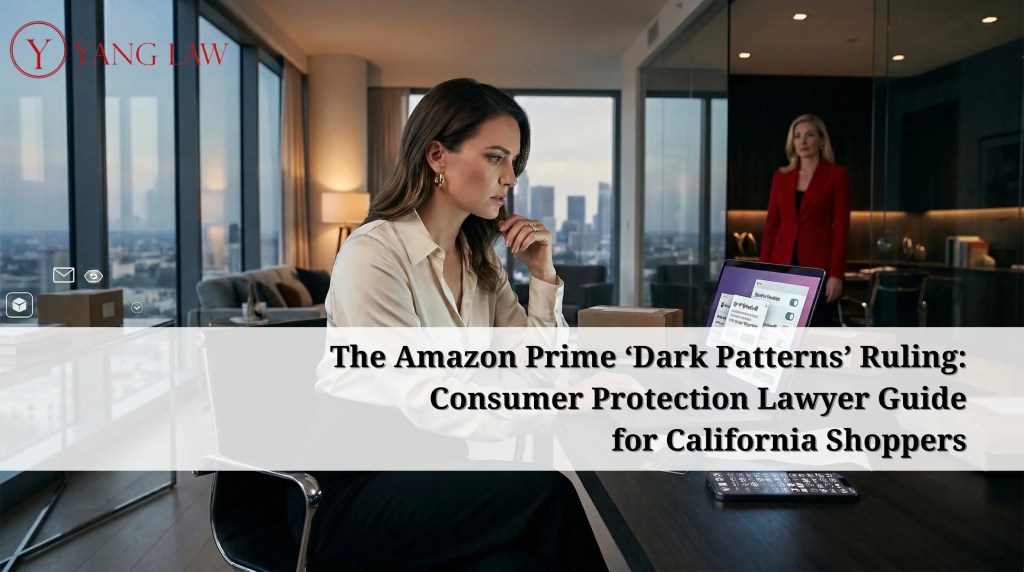
In a recent federal case, regulators accused Amazon of using confusing screens and “dark patterns” to sign people up for Prime. According to the Federal Trade Commission’s lawsuit, Amazon collected customers’ payment information and funneled them into paid memberships before clearly explaining the terms, leading to surprise charges many shoppers never meant to approve. That kind of design trick isn’t just annoying—it can be illegal.
From Amazon Prime to Your “Free Trial”
If you’ve ever clicked “Start Free Trial” and later found mystery charges on your card, you’ve felt the same problem. California’s Automatic Renewal Law (Bus. & Prof. Code §§ 17600–17606), Unfair Competition Law (Bus. & Prof. Code § 17200 et seq.), and the Consumer Legal Remedies Act (Civ. Code § 1750 et seq.) are meant to protect you from exactly this.
In this post, we’ll walk through your rights, the most common online “gotchas,” and how a consumer protection lawyer can step in when a company crosses the line.
What a Consumer Protection Lawyer Actually Does in California
A consumer protection lawyer is the person you call when a company tricks you, overcharges you, or makes it nearly impossible to cancel a service. In California, that can mean fighting:
- Surprise “junk fees”
- Misleading “free trials”
- Buried automatic renewals
- Fake discounts
- Online checkouts that nudge you into buying more than you meant to
These lawyers look at what really happened on the page or in the contract, then match it up against California’s strongest consumer laws.
They use the Unfair Competition Law (Bus. & Prof. Code § 17200 et seq.) and False Advertising Law (Bus. & Prof. Code § 17500) to challenge unfair or misleading business practices and ads. They use the Consumer Legal Remedies Act (Civ. Code § 1750 et seq.) when companies deceive you in selling goods or services. And for subscriptions, they rely on the Automatic Renewal Law (Bus. & Prof. Code §§ 17600–17606) to demand refunds, clean up confusing sign‑up flows, and guide honest businesses so they stay compliant—not the next Amazon‑style headline.
This is general information for California readers, not legal advice for your specific situation.
Common ‘Dark Patterns’ and Other Tricks That May Break California Law
The Amazon Prime case focuses on how sign‑up and cancellation pages can quietly push people into paid memberships. Many other sites use similar tricks that can cross the line under California law.
- Pre‑checked boxes or default “Yes, sign me up” choices can violate the Automatic Renewal Law, which requires clear, affirmative consent—one of the same concerns raised in the Amazon Prime lawsuit.
- Hard‑to‑find cancel buttons or forcing you to click through multiple confusing screens may violate the ARL’s “easy cancellation” rule and be attacked as “unfair” under the Unfair Competition Law (Bus. & Prof. Code § 17200 et seq.).
- Vague “free trial” offers that don’t clearly say when you’ll be charged, or how much, can trigger the ARL, the Consumer Legal Remedies Act (Civ. Code § 1750 et seq.), and the False Advertising Law (Bus. & Prof. Code § 17500) for hiding key terms.
- Endless pop‑ups or guilt‑trip messages when you try to cancel (“Are you sure you want to lose this amazing deal?”) or misleading countdown timers that pretend an offer is about to expire echo the tactics highlighted in the Prime case and may be considered deceptive under the UCL, FAL, and CLRA.
Again, this is general information, not individual legal advice.
What to Do if You Were Trapped in an Online Subscription
Step 1: Get the Full Picture and Try to Cancel
Start by logging into your account and reviewing your billing history and emails so you know exactly when the charges started and how often they hit. Take screenshots of:
- The sign‑up page and checkout screens
- Any “free trial” or “limited‑time” language
- Confirmation emails and receipts
- Any cancellation instructions you can find
These can be crucial under California’s Automatic Renewal Law (Bus. & Prof. Code §§ 17600–17606).
Then try to cancel using every option the company offers: online, in‑app, by email, or chat. Keep proof of every attempt, especially if the site makes cancellation confusing or forces you through endless screens. Save chat transcripts and note any error messages you see.
Step 2: Fight the Charges and Know When to Get Help
If charges keep coming, contact your bank or card issuer right away and dispute the unauthorized or misleading subscription payments. Ask to:
- Block future charges from that merchant
- Review how far back they can reverse or credit charges
- Send you copies of any dispute forms in writing
At the same time, keep a log of dates, names, and what each company representative said—this helps show a pattern that may violate the Unfair Competition Law (Bus. & Prof. Code § 17200 et seq.) or Consumer Legal Remedies Act (Civ. Code § 1750 et seq.).
If the amount is significant, the design felt like a “trap,” or you learn many others had the same issue, it may be time to stop fighting alone and talk with a consumer protection lawyer about potential claims or even a class action.
This is general information for California consumers, not legal advice for your specific situation.
The Cost of Waiting: What Happens if You Don’t Push Back
Small Charges, Big Consequences
Those $9.99 or $14.99 “mystery” subscription charges may not feel worth the fight at first, but over months or years they can quietly add up to hundreds or even thousands of dollars. The longer you wait, the harder it can be to get refunds from the company or your bank, and key evidence—like screenshots or emails—may disappear.
Under California’s Automatic Renewal Law, Unfair Competition Law (Bus. & Prof. Code § 17200 et seq.), and Consumer Legal Remedies Act, you may have strong rights, but they are not open‑ended. Legal deadlines (called statutes of limitation) can run out in as little as one to four years, depending on the claim. Once that deadline passes, your legal options shrink fast.
The Emotional Toll of “Letting It Go”
Ignoring unfair charges does not just hit your wallet; it wears you down emotionally. Many people feel ashamed, stressed, or “stupid” for getting trapped by confusing sign‑up flows or dark patterns like the ones highlighted in the Amazon Prime case. That embarrassment often keeps folks silent, even when the law is actually on their side.
Reaching out early to a consumer protection lawyer can help you understand your options, stop the bleeding, and replace that sense of powerlessness with a clear plan.
From “It’s Probably My Fault” to Fighting Back: A California Shopper’s Story
When “Maria,” a Los Angeles teacher, saw a $14.99 charge from a shopping app she barely remembered using, she assumed she’d messed up. She remembered rushing through a busy checkout screen, thinking she was just paying for a one‑time purchase.
Months later, with hundreds of dollars gone and no easy way to cancel, she felt embarrassed and a little foolish for “not reading the fine print.”
How a Lawyer Changed the Story
When she finally spoke with a consumer protection lawyer, the first thing they did was review screenshots of the sign‑up flow. The lawyer spotted likely issues under California’s Automatic Renewal Law (Bus. & Prof. Code §§ 17600–17606) and the Consumer Legal Remedies Act (Civ. Code § 1750 et seq.), and potential claims under the Unfair Competition Law (Bus. & Prof. Code § 17200 et seq.).
With counsel pushing back, Maria obtained refunds and the company agreed to revise its disclosures. More importantly, she moved from shame to a real sense of power, realizing it wasn’t “her fault” for being tricked by dark patterns.
This is a general example to illustrate how the law can work; it is not a prediction about any specific case.
Quick Checklist: Do You Need a Consumer Protection Lawyer?
Think of this as a quick self‑check. If any of these sound familiar, it may be worth at least a short consultation to understand your rights and risks under California law.
For California Consumers
- Have you been hit with unexpected subscription or “free trial” charges you don’t remember clearly agreeing to?
- Did you try to cancel online and run into impossible‑to‑find buttons, endless screens, or “chat only” cancellation?
- Do you feel misled by “limited‑time” or “one‑time” offers that quietly turned into recurring charges?
- Have small monthly charges slowly snowballed into hundreds of dollars over time?
For California Small Businesses
- Are you unsure whether your website’s checkout, free trial, or auto‑renewal flow complies with California’s Automatic Renewal Law (Bus. & Prof. Code §§ 17600–17606)?
- Do you worry your marketing language could be viewed as “unfair” or “deceptive” under the UCL (Bus. & Prof. Code § 17200 et seq.) or CLRA (Civ. Code § 1750 et seq.)?
If you answered “yes” to even one question, talking with a consumer protection lawyer can help you assess your options before problems grow. This is general information for California readers, not legal advice for your specific situation.
How Yang Law Offices Can Help Consumers and California Businesses
For California Consumers
If you’ve been hit with surprise subscription or “free trial” charges, our team can review what happened and explain your options under California’s Automatic Renewal Law (Bus. & Prof. Code §§ 17600–17606), the Unfair Competition Law (Bus. & Prof. Code § 17200 et seq.), and the Consumer Legal Remedies Act (Civ. Code § 1750 et seq.).
We focus on practical goals:
- Stopping unfair charges
- Pursuing refunds where appropriate
- Pushing companies to fix misleading sign‑up and cancellation flows
You don’t have to feel embarrassed or “at fault” for dark patterns—this is exactly what these laws are designed to address.
For California Businesses
We also advise startups and established companies that want to stay compliant and build trust. We’ll walk through your sign‑up, free trial, and cancellation paths and flag risks under the ARL, UCL, CLRA, and False Advertising Law (Bus. & Prof. Code § 17500).
The goal is clear: make it easy for users to understand what they’re buying while reducing your chances of becoming the next headline case.
What To Bring — And What To Expect
For consumers, it helps to bring:
- Screenshots
- Emails and confirmation messages
- Links or copies of terms of service
- Bank or card statements showing the charges
For businesses, share your current checkout pages, UX mockups, and subscription terms. Your consultation is confidential and focused on next steps—whether that’s a demand letter, a claim, or a compliance tune‑up.
This is general information, not legal advice; to get advice for your specific situation, contact Yang Law Offices to schedule a consultation.
The Bottom Line: You Don’t Have to Navigate This Alone
Moving Forward With Clarity
The Amazon Prime case is a reminder that “dark patterns” aren’t just annoying—they can cross the legal line. In California, laws like the Automatic Renewal Law (Bus. & Prof. Code §§ 17600–17606), Unfair Competition Law (Bus. & Prof. Code § 17200 et seq.), and Consumer Legal Remedies Act (Civ. Code § 1750 et seq.) give real teeth to your rights as a shopper and real responsibilities to businesses.
Whether you’re a frustrated consumer tired of surprise charges or a business that wants to stay far away from the next headline, you don’t have to figure this out by yourself. A consumer protection lawyer can look at your specific situation, explain how these laws apply, and help you build a clear, concrete plan—whether that means seeking refunds, revising your UX, or both.
This article is general information, not legal advice; to get advice for your situation, consider scheduling a consultation with Yang Law Offices.
Important Disclaimer About This Blog
Informational, Not Legal Advice
This blog is for general informational and educational purposes only. It focuses on California law, including statutes like the Unfair Competition Law (Bus. & Prof. Code § 17200 et seq.), the Consumer Legal Remedies Act (Civ. Code § 1750 et seq.), and the Automatic Renewal Law (Bus. & Prof. Code §§ 17600–17606). It is not legal advice for your specific situation, and reading it does not create an attorney‑client relationship with Yang Law Offices or any of our attorneys.
The Amazon Prime “dark patterns” case and related consumer protection issues are part of a fast‑developing area of law. Court decisions, statutes, and enforcement priorities can and do change. If you have questions about charges on your account, a subscription flow your business uses, or how these laws might apply to you, you should speak directly with a qualified California consumer protection lawyer to get advice tailored to your circumstances.
Select Sources Cited
- FTC Sues Amazon for Enrolling Consumers in Prime Without Consent, Makes It Harder to Cancel – Federal Trade Commission press release summarizing the lawsuit over alleged Prime “dark patterns.”
- California Automatic Renewal Law – Bus. & Prof. Code §§ 17600–17606 – Official California Legislative Information on automatic renewal requirements.
- Unfair Competition Law – Bus. & Prof. Code § 17200 – Statutory text defining “unfair competition” in California.
- False Advertising Law – Bus. & Prof. Code § 17500 – California’s core statute on misleading advertising.
- Consumer Legal Remedies Act – Civ. Code § 1750 et seq. – Statutory text outlining consumer protections against deceptive practices.